

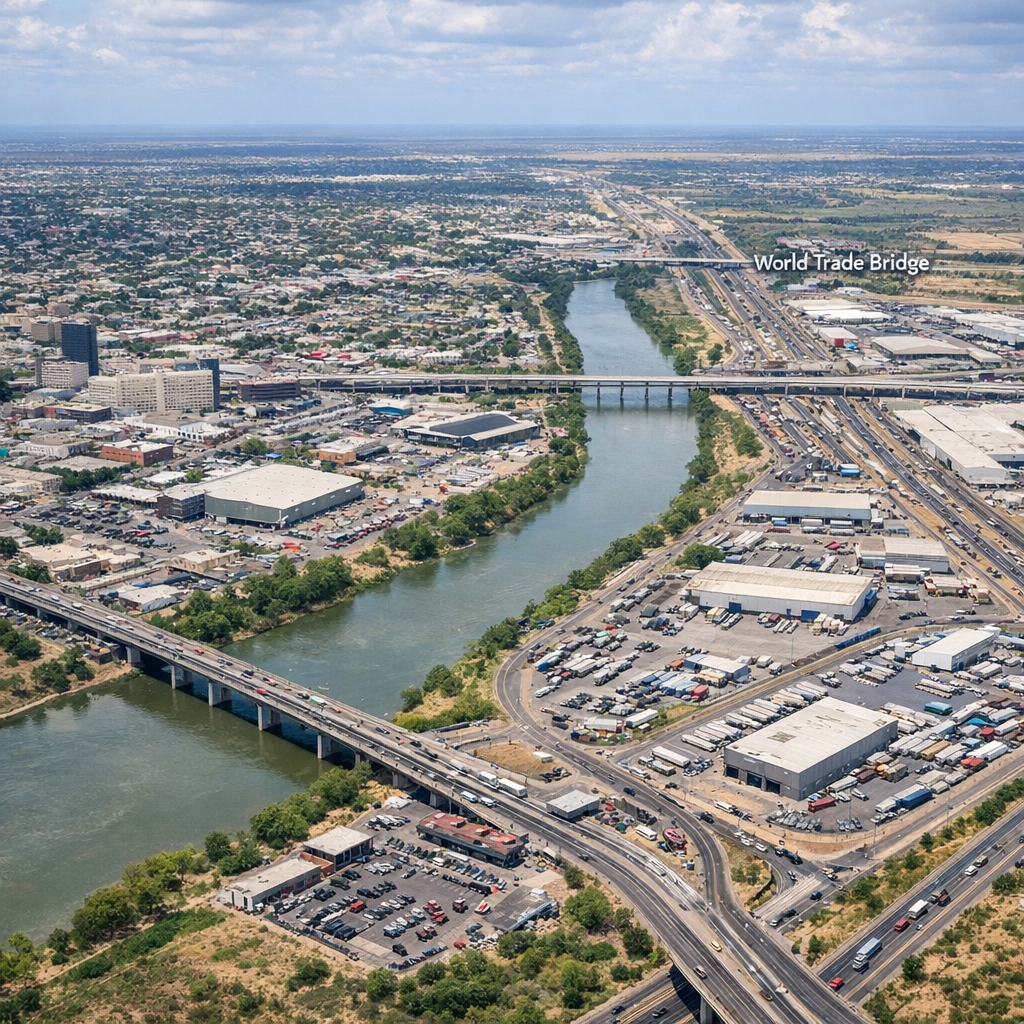
Laredo, Texas, long celebrated as the largest inland port in the Western Hemisphere, is undergoing a significant economic transformation. Traditionally known for its pivotal role in international trade, the city is now positioning itself as a prime destination for industrial investment, aiming to diversify its economic base and attract high-value industries.
Strategic Location and Infrastructure
Laredo’s strategic position on the U.S.-Mexico border has been a cornerstone of its economic success. The city boasts four international bridges, two rail crossings, access to major interstate highways, and an international airport with substantial logistics capacity. These assets have historically facilitated robust trade activities, with the Port of Laredo handling over $339.7 billion in trade in 2024, accounting for 62% of land port trade in Texas.
Diversification into Advanced Industries
Recognizing the need for economic diversification, local leaders are actively working to attract sectors such as advanced manufacturing, data centers, automotive, and aerospace industries. David A. Stedman, President and CEO of the Laredo Economic Development Corporation (LEDC), emphasized this shift, stating, “We are at a critical point of transition. Laredo is no longer just a point of transit—it is becoming a destination for investment.”
One notable initiative is the “Data City” project, aimed at developing local power generation to support high-tech investments. This project underscores Laredo’s commitment to creating an environment conducive to technological infrastructure and innovation.
Binational Collaboration and Workforce Development
Laredo’s proximity to industrial regions in Mexico, such as Tamaulipas and Nuevo León, positions it as a key player in the integration of North American supply chains. Strengthening binational labor mobility is seen as a vital component of this strategy. Stedman highlighted the potential, noting, “There is a strong workforce on both sides of the border. If we can establish legal mechanisms that allow mobility, both economies could thrive.”
To support this vision, the LEDC has introduced programs like MileOne, Laredo’s first co-working space and small business incubator. MileOne provides affordable workspaces, mentorship, and educational resources, fostering entrepreneurship and cross-border collaboration.
Future Outlook
As Laredo continues to evolve from a trade-centric city to an industrial hub, the focus remains on leveraging its strategic location, robust infrastructure, and collaborative initiatives to attract diverse industries. This transformation aims to create a more resilient and dynamic economy, offering new opportunities for local businesses, entrepreneurs, and the workforce.